
Understanding the Nervous System: Brain Development, Sensory Processing, and Why It Matters
When people think about the most important organ in the body, answers like the heart, lungs, or liver often come to mind.
While every organ plays a vital role, there is one system that coordinates and regulates them all: the nervous system.
Every heartbeat, every breath, every movement, and every sensation depends on the nervous system. Understanding nervous system function helps us better appreciate how the body develops, adapts, and responds throughout life.
From brain development in babies to adult neurological health, the nervous system serves as the master control system of the body.
Despite its importance, many people don't fully understand how the nervous system develops, how it works, or why it is so important throughout every stage of life. Let's take a deeper look.
What Is the Nervous System?
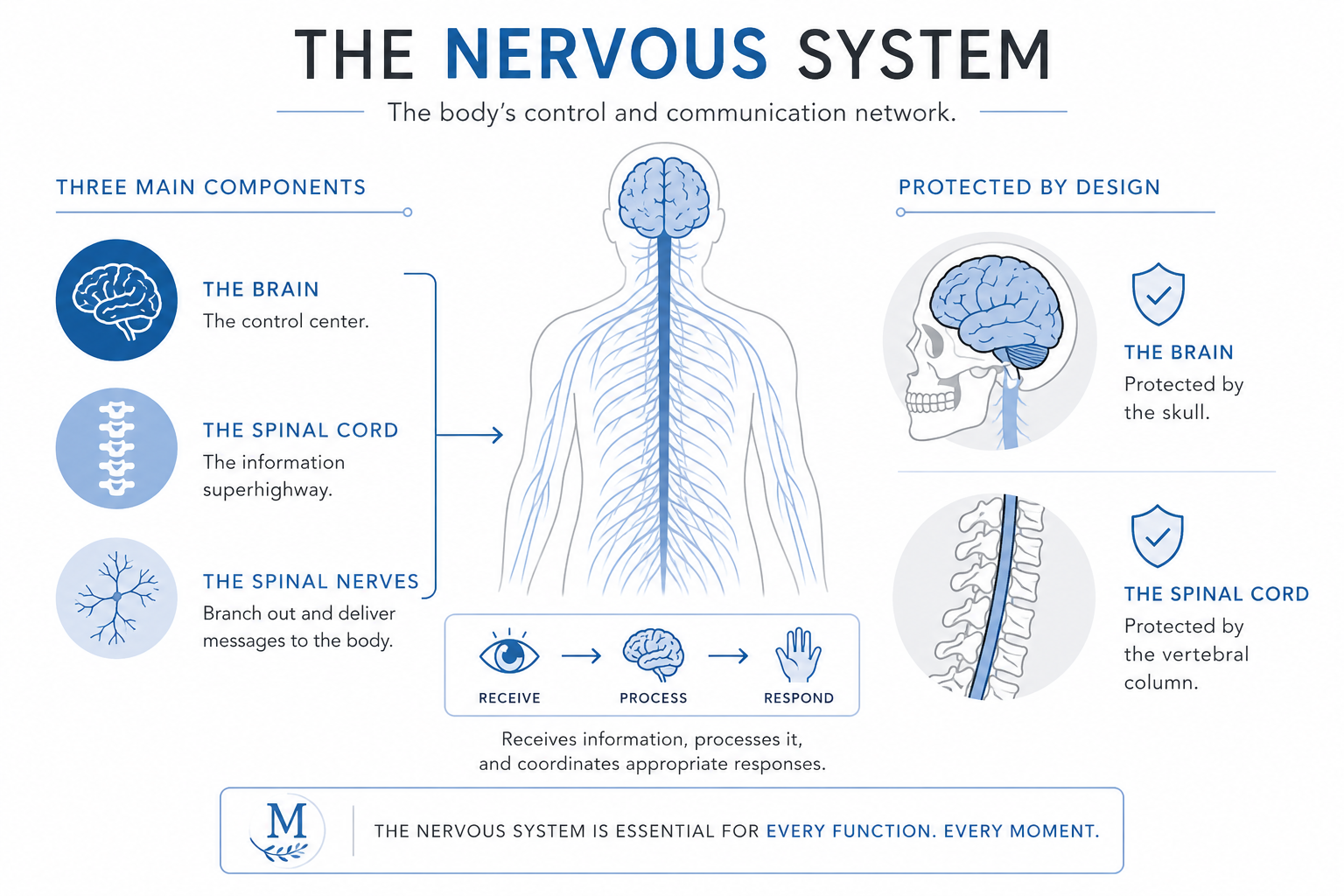
The nervous system consists of three primary components:
The brain
The spinal cord
The spinal nerves
Together, these structures form the body's control and communication network.
The nervous system is responsible for receiving information from both the internal and external environment, processing that information, and coordinating appropriate responses.
Because of its importance, the nervous system is heavily protected. The brain is housed within the skull, while the spinal cord is protected by the vertebral column. These bony structures serve as armor for the body's most important communication system.
The First System to Develop
Human development begins with the formation of the nervous system.
Within the first few weeks after conception, a structure known as the neural tube begins to form. This structure eventually develops into the brain and spinal cord.
Long before the heart beats, before the stomach forms, and before many other organs begin developing, the nervous system is already laying the foundation for the body's future growth.
This neurological blueprint serves as the framework that guides the development and coordination of other organ systems throughout pregnancy.
Brain Development During Pregnancy
As pregnancy progresses, the nervous system becomes increasingly sophisticated.
Throughout the three trimesters, the developing brain begins differentiating into specialized regions responsible for functions such as:
Movement
Memory
Vision
Hearing
Emotion
Coordination
During this time, billions of neurons are formed and begin creating connections with one another. Sensory pathways develop, reflexes emerge, and the baby becomes capable of responding to touch, sound, and light even before birth.
The nervous system is not waiting until birth to begin working. It is actively developing and adapting throughout the entire pregnancy.
Why the First Year of Life Matters
This period represents one of the most important phases of brain development in babies. During the first year of life, the nervous system develops at an extraordinary pace, creating the foundation for future movement, learning, emotional regulation, and sensory processing.
At birth, the brain is only about 25% of its adult size. By the end of the first year, it has grown to approximately 60% of its adult size.
This rapid growth reflects the tremendous amount of neurological development taking place.
During this period, the brain is constantly building new neural connections based on experiences and interactions with the world.
The quality and quantity of these experiences help shape the developing nervous system.
Understanding Sensory Processing
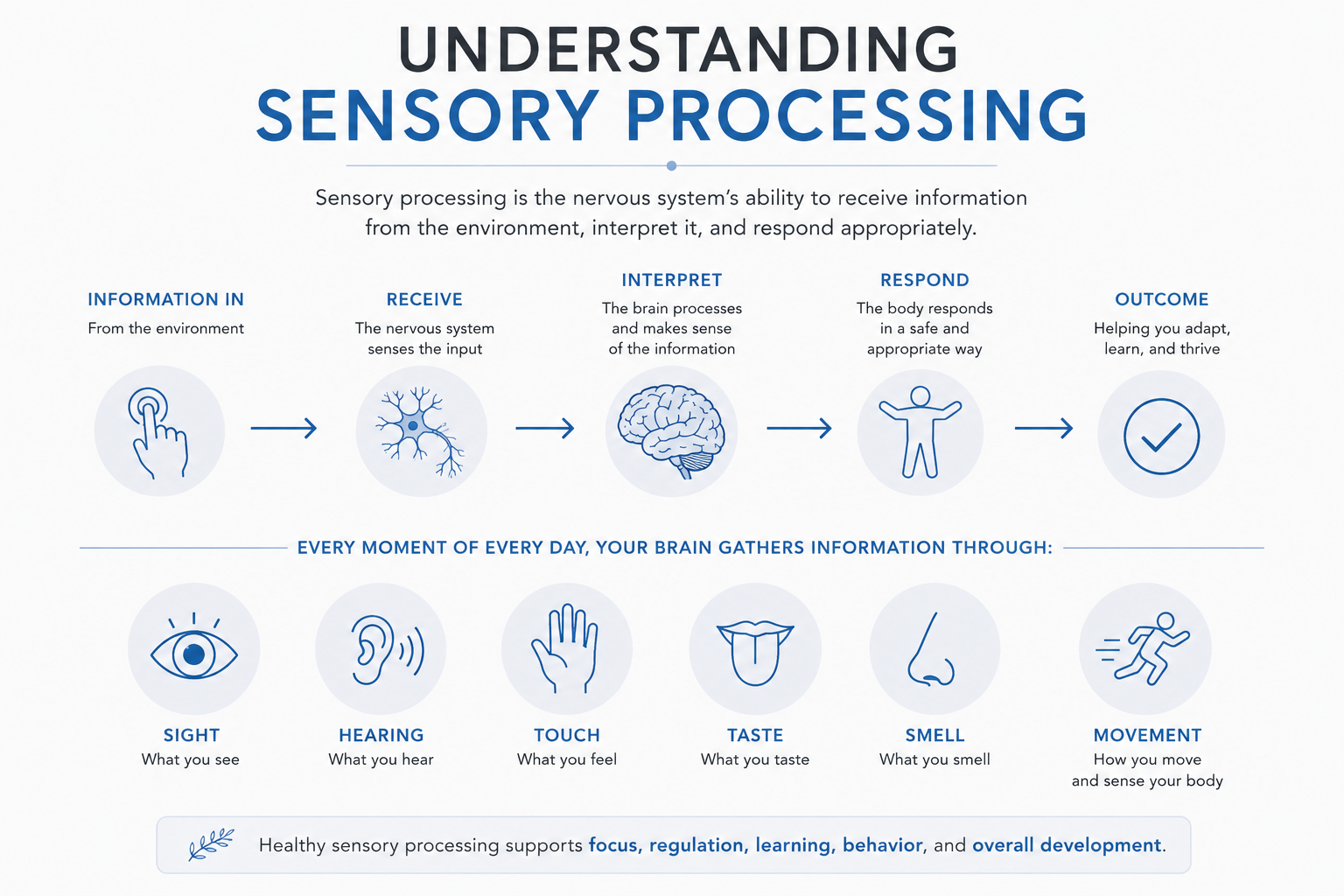
To understand how the brain develops, it's important to understand sensory processing. Sensory processing is the nervous system's ability to receive information from the environment, interpret it, and respond appropriately.
Every moment of every day, your brain is gathering information through:
Sight
Hearing
Touch
Taste
Smell
Movement
For example, if you see dark clouds gathering overhead, your brain interprets that visual information and may prompt you to seek shelter. If you touch a hot stove, sensory information travels to the brain, which quickly responds by causing you to pull your hand away.
The same process occurs internally. A stomach ache, an injury, hunger, fatigue, or changes in body temperature all provide information that the brain must process and respond to.
Sensory processing is the brain interpreting information from the environment and coordinating appropriate responses. As children grow, sensory processing plays a critical role in child neurological development, helping the brain learn how to interact with the world.
How Sensory Processing Works
The process follows a simple pattern:
A stimulus occurs.
Sensory information travels through nerves to the spinal cord and brain.
The brain processes the information.
A response is generated.
Signals travel back through the nervous system to carry out that response.
This process occurs millions of times each day without conscious thought.
Every action, reaction, and adaptation depends on this constant flow of information.
Why Play Is Essential for Brain Development
Adults often view play as entertainment.
For children, play is neurological development.
The developing brain learns through sensory and motor experiences. Every movement, sound, touch, and interaction provides information that helps strengthen neural pathways.
Activities such as:
Tummy time
Crawling
Walking
Singing songs
Reading books
Playing with toys
Physical affection
Human interaction
all contribute to healthy neurological development.
Research continues to show that movement, exploration, and play are essential components of child neurological development. Every sensory experience contributes to the growth and organization of the developing nervous system, and ultimately how we interpret and interact with the world.
This is why play is not merely recreation. It is one of the primary ways the developing brain builds the foundation for future learning, movement, and behavior.
The Two Branches of the Autonomic Nervous System
One important part of the nervous system is known as the autonomic nervous system.
This system helps regulate many of the body's automatic functions and consists of two major branches.
The Sympathetic Nervous System
Often referred to as the "fight-or-flight" system, the sympathetic nervous system helps the body respond to stress and challenges.
This is the body's gas pedal.
When activated, heart rate increases, alertness rises, and the body prepares for action.
The Parasympathetic Nervous System
Often referred to as the "rest-and-digest" system, the parasympathetic nervous system supports recovery, healing, digestion, and restoration.
This is the body's brake pedal.
When activated, the body can focus on repair, recovery, and maintenance.
Both systems are necessary. Health depends on the body's ability to shift appropriately between these two states based on the demands of the environment.
The Goldilocks Principle of Health
A useful way to think about the nervous system is through the story of Goldilocks and the Three Bears.
One bowl of porridge was too hot.
One was too cold.
One was just right.
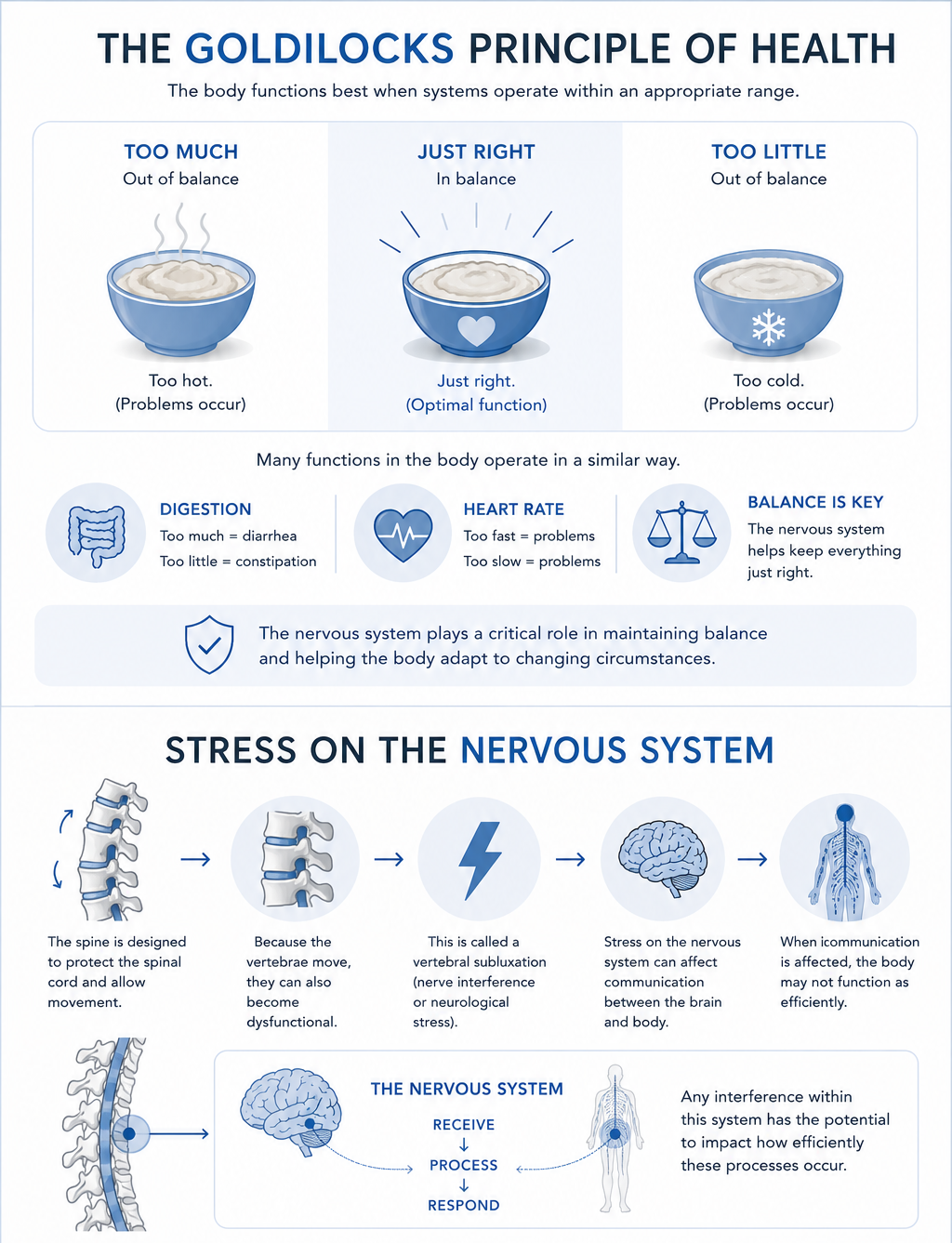
Many functions in the body operate in a similar way.
Too much digestive activity may result in diarrhea. Too little digestive activity may contribute to constipation.
A heart rate that is too fast can be problematic. A heart rate that is too slow can also create challenges.
The body functions best when systems operate within an appropriate range. The nervous system plays a critical role in maintaining this balance and helping the body adapt to changing circumstances.
Stress on the Nervous System
The spine is designed to protect the spinal cord and allow movement at the same time.
Because the vertebrae move, they can also become dysfunctional.
Within the Gonstead system of chiropractic, we refer to this as a vertebral subluxation. Other terms often used include nerve interference or neurological stress.
When stress is placed on the nervous system, communication between the brain and body may be affected.
If the nervous system is responsible for receiving information, processing that information, and coordinating responses, then any interference within that system has the potential to impact how efficiently those processes occur.
This is why Gonstead chiropractors evaluate the spine for vertebral subluxations—areas of spinal dysfunction that may place stress on the nervous system. Because nervous system health depends on clear communication between the brain and body, Gonstead chiropractors focus on identifying and correcting these areas through specific chiropractic adjustments.
Supporting Healthy Neurological Function
From the earliest stages of development through adulthood, every aspect of health depends upon the body's ability to receive information, process information, and respond appropriately.
The goal of Gonstead chiropractic care is to help reduce stress on the nervous system so that communication between the brain and body can occur as efficiently as possible.
Just like Goldilocks, the objective is balance—not too much, not too little, but functioning the way the body was designed to function.
When the nervous system is working well, the body is better equipped to adapt, develop, heal, and thrive.
Interested in Learning More?
At Manifest Chiropractic, we focus on neurologically centered Gonstead chiropractic care for infants, children, pregnant mothers, and families.
Our goal is to identify and reduce stress on the nervous system so the body can function, adapt, and develop the way it was designed to.
If you have questions about your child's development, sensory processing challenges, pregnancy, or nervous system health, we'd love to help.
Schedule a consultation today to learn whether Gonstead chiropractic may be right for you or your family.